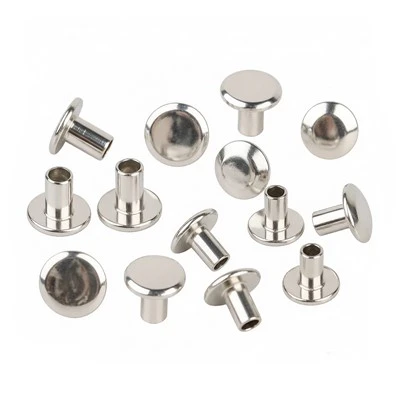
Tubular rivets are commonly used fasteners and are widely used in many fields such as automobiles, aviation, and machinery manufacturing. They hold the material in place by creating an expansion by pulling one end into the other. According to different usage requirements and application scenarios, tubular rivets have a variety of specifications and standards, mainly including differences in diameter, length, material, etc.
Diameter: The diameter of tubular rivets ranges from as small as a few millimeters (mm) to as large as tens of millimeters. The specific selection is determined by factors such as the thickness of the connecting material required in the actual application and the required load-bearing capacity.
Length: Similarly, the length of the rivet also needs to be determined based on the total thickness of the object being connected, and a certain margin is usually left to ensure a good fixation effect.
Material: Common tubular rivet materials include but are not limited to aluminum, steel, stainless steel, etc. Rivets made of different materials are suitable for different environmental conditions (such as high corrosion protection requirements or low temperature environments) and strength requirements.
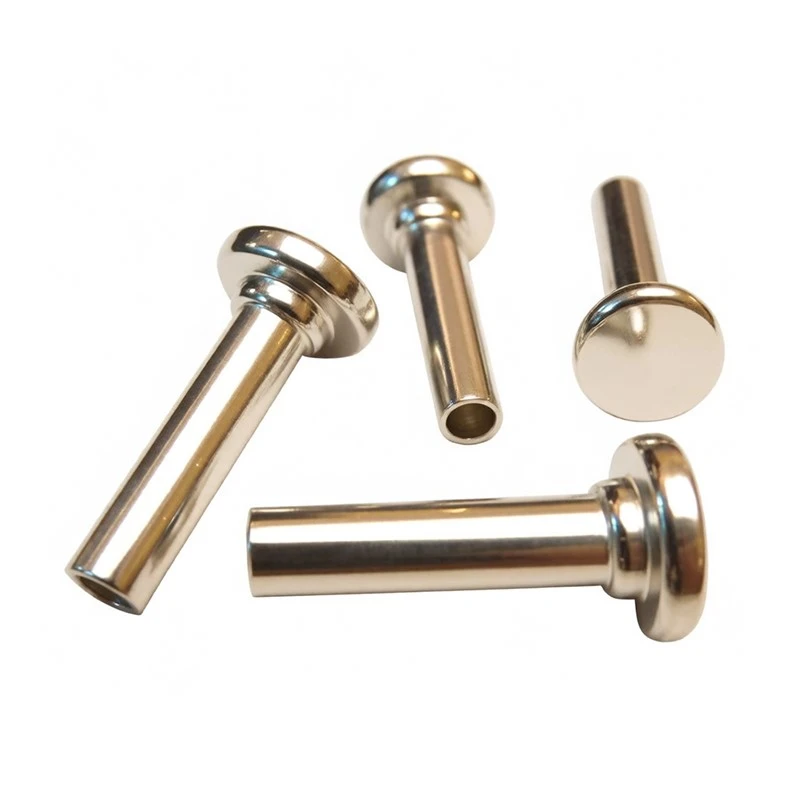
Head shape: In addition to the basic size, the design of the rivet head is also very important, such as flat head type, round head type, etc., which will affect the appearance after installation and whether it is suitable for specific applications.
Tail treatment: For some special-purpose tubular rivets, the tail may be specially treated. For example, sealed rivets are designed to prevent liquid penetration.
It is worth noting that when selecting tubular rivets, you also need to consider relevant international or national standards and specifications, such as relevant standard documents issued by ISO (International Organization for Standardization), DIN (German Industrial Standards), ASME (American Society of Mechanical Engineers), etc. These standards not only define the specific dimensional parameters of rivets, but also stipulate quality control testing methods and other content to ensure that products can meet safety and reliability requirements.