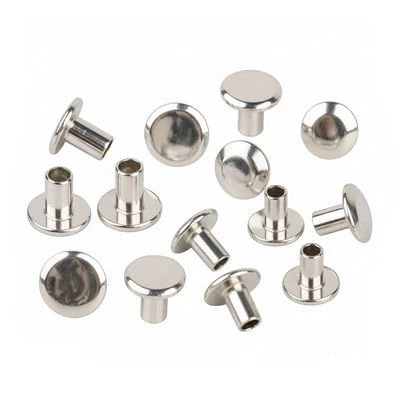
As common fasteners, tubular hollow rivets are widely used in sectors such as luggage and electronic equipment due to their lightweight nature and moderate load-bearing capacity. Understanding their specifications helps ensure a precise match with requirements during procurement or manufacturing.
Basic Specifications
1. Rivet Diameter (d): Common ranges are 2mm to 8mm, in 0.5mm increments. For example, a rivet with d=3mm has an internal tube diameter of approximately 1.5–2mm, making it suitable for joining thin materials.
2. Rivet Length (L): The total length includes both the head and the shank; common specifications include 6mm, 8mm, and 10mm. Note: The effective riveting length (L1) should be ≥ the total thickness of the joined parts plus 3mm to ensure a secure connection.
3. Material and Strength: The main body is typically made of aluminum, iron, or stainless steel. Tensile strength falls into standard grades (approx. 200–300 MPa) and high-strength grades (400–500 MPa); select according to specific needs.
Key Selection Criteria
1. Head Type: Options include flat round heads (GB/T 12615), countersunk heads (GB/T 867), etc. Countersunk rivets are better suited for applications requiring a flush surface, such as laptop casing assembly.
2. Riveting Process Compatibility: Hollow rivets require specialized riveting tools. Impact-style (manual) tools suit small batches, while pneumatic (automatic) tools offer higher efficiency. Control the striking force during operation to prevent rivet head deformation.
3. Industry-Specific Requirements: The aerospace sector often uses 3003 aluminum alloy rivets (e.g., GB/T 3098.1), while the electronics industry prioritizes anti-oxidation treatments (such as nickel plating) to enhance corrosion resistance.
Application Scenarios and Specification Matching
1. Luggage Manufacturing: Aluminum hollow rivets with d=2–4mm and L=8–12mm are recommended, balancing lightweight properties with strength.
2. Home Appliance Casings: Stainless steel countersunk rivets (d=4–5mm) prevent rusting and are suitable for components like washing machine control panels.
3. Automotive interiors: High-strength iron rivets (d=5–6 mm) are used for seat frame connections, offering excellent vibration resistance.
When purchasing, it is recommended to refer to the GB/T 12616-2019 standard for tubular rivets or provide samples for the supplier to match specifications. Proper selection helps prevent riveting failure or material waste caused by parameter discrepancies.