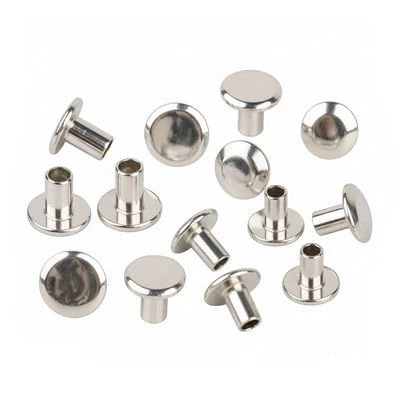
Double-sided rivets are common fasteners widely used in various types of mechanical equipment and architectural structures. To ensure their quality and performance, they must adhere to specific standards and specifications.
Definition and Classification
A double-sided rivet is a fastener featuring two riveting surfaces, typically consisting of a rivet shank and a rivet head. Depending on their intended use and material, they can be categorized into various types, such as aluminum or steel double-sided rivets. As these types differ in dimensions, materials, and performance characteristics, selection should be based on the specific application scenario.
Technical Requirements
Dimensional Accuracy: The dimensions of the rivet must comply with relevant standards, covering parameters such as shank diameter and length, as well as head diameter and thickness. Dimensional precision is crucial for ensuring the strength and sealing integrity of the riveted joint.
Material Requirements: The material must possess sufficient strength and corrosion resistance to withstand operational loads and environmental factors over the long term. Common materials include aluminum alloys and stainless steel.
Surface Treatment: To enhance corrosion resistance and aesthetic appeal, surface treatments-such as anodizing or galvanizing-are typically applied. These treatments effectively extend the service life of the rivets.
Application Areas
Double-sided rivets are widely used in sectors such as aerospace, automotive manufacturing, and electronics. In aerospace, they connect structural components of aircraft and spacecraft, demanding exceptional strength and reliability. In automotive manufacturing, they join vehicle bodies and components, ensuring safety and stability. In the electronics industry, they are used to secure circuit boards and other internal components.

Conclusion
Understanding the standards and specifications for double-sided rivets is essential for their proper selection and use. Adherence to these standards ensures reliability and safety in practical applications, thereby guaranteeing the stable operation of mechanical equipment and architectural structures. When selecting double-sided rivets, factors such as dimensional accuracy, material requirements, and surface treatment must be considered to meet the needs of specific applications.