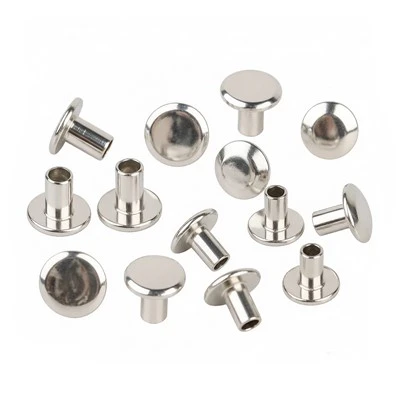
In a broad sense, furniture connectors refer to any components used during furniture manufacturing to join and secure parts; this encompasses both traditional elements-such as the mortise-and-tenon joints, copper nails, and hinges found in ancient Chinese furniture-and modern connecting hardware. In a narrower sense, the term specifically denotes the fasteners used to join panels in panel-based furniture, such as cam locks and screws. They can be categorized by assembly method (e.g., "three-in-one" or "two-in-one" connectors) or by function (e.g., standard fasteners, knock-down connectors, or heavy-duty connectors). Modern panel furniture commonly employs cam lock connectors, which rely on embedded inserts and a rotating locking mechanism for assembly; meanwhile, invisible connectors developed by the US company Wood-E-Z address the shortcomings of three-in-one connectors while offering structural strength comparable to traditional frame construction.
Their evolution has unfolded in three stages: mortise-and-tenon joinery originated in China's Neolithic Hemudu culture and became a core technique in traditional woodworking; iron nails appeared during the Spring and Autumn and Warring States periods but only became widespread in the 19th century following the introduction of foreign machine-made nails. Knock-down connectors emerged alongside the rise of panel furniture in the 1970s; notably, the 1960 launch of the "Variante 32 System" by the German company Häfele marked the transition of furniture hardware R&D and production into an era of mass manufacturing. The introduction of the "32mm System" to China in the early 1980s further propelled the industrialization of furniture production. Modern technology emphasizes standardization and the ability to repeatedly assemble and disassemble furniture; for instance, three-in-one connectors allow for flexible assembly without adhesives, while invisible connectors require specialized cutting machinery and software for precision manufacturing. Furthermore, furniture hardware is increasingly evolving toward smart technology, exemplified by systems such as electric opening mechanisms.