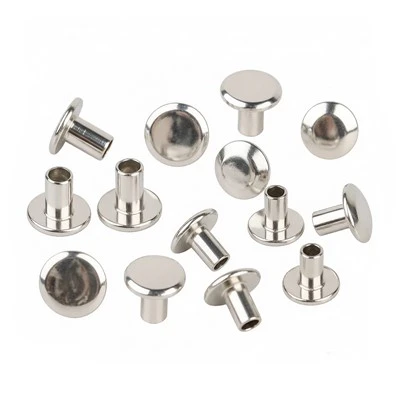
Signage rivets are fasteners used to mount signs, plaques, markers, and other decorative or informational panels. They aretypically made of metal and feature a robust structure capable of securing signage to surfaces such as walls, posts, and door frames.
Specifications and standards for signage rivets vary by manufacturer, region, and specific application, but generally include the following:
1. Material: Signage rivets are usually made from durable, corrosion-resistant metals such as aluminum, stainless steel, copper, brass, or steel.
Material selection typically depends on the operating environment and aesthetic requirements.
2. Diameter: Signage rivet diameters are generally standardized; common sizes include 1/8 inch (3.2 mm), 5/32inch (4 mm), and 3/16 inch (4.8 mm). Different diameters accommodate different load-bearing capacities.
3. Length: The length of the rivet depends on the thickness of the material to be penetrated. Generally, the rivet must be long enough to pass through both the signage and the mounting surface while ensuring secure fastening.
4. Head Type: Rivet heads come in various shapes, such as flat, round, semi-round, or countersunk (wedge-shaped).
The choice of head type usually depends on aesthetic preferences and the specific application scenario.
5. Setting Force: This refers to the force required to expand the rivet's tail-under the correct application pressure-to ensure a secure hold.
This is typically determined through standardized testing involving pressure and material strength.
6. Standards: Different regions and countries may have distinct standards and specifications governing rivet dimensions and performance.
For example, ISO 15977 is an international standard specifying requirements and test methods for metal rivets.
7. Industry Standards: Certain industries may establish their own specifications and standards for signage rivets to meet specific needs and safety requirements.
These standards are usually developed by relevant industry organizations or associations. When selecting rivets for nameplates, it is important to ensure they meet applicable specifications and standards, and to choose the appropriate diameter, length, material, and head type based on specific installation requirements. Additionally, proper installation methods must be followed to ensure the nameplate is securely fastened in the desired location.