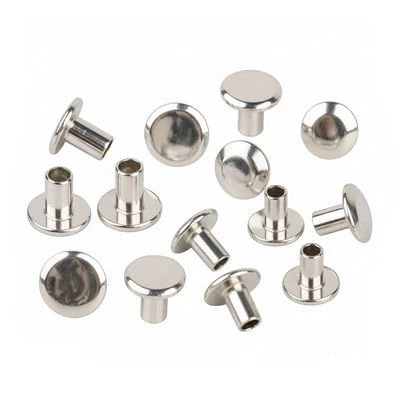
1. Why do nameplates require specialized rivets for mounting?
Standard rivets tend to loosen under prolonged vibration or temperature fluctuations, whereas specialized nameplate rivets address three key issues through their design:
Anti-rotation: Knurled or straight-grooved surfaces increase friction, preventing the nameplate from shifting.
Corrosion resistance: Materials such as stainless steel and copper alloys withstand outdoor acidic or alkaline environments.
Ease of installation: Round-head or flat-head designs facilitate striking without damaging the nameplate surface.
2. How do long-term performance characteristics differ based on rivet material?
Material composition determines rivet stability in humid, high-temperature, or chemical environments:
304 Stainless Steel: A cost-effective choice; resistant to standard rainfall and mild acids/alkalis, though pitting corrosion may occur in coastal areas with high salt-spray exposure.
316 Stainless Steel: Contains molybdenum, offering over 50% greater salt-spray resistance; suitable for chemical plants, ports, and similar environments.
Brass: Offers excellent electrical conductivity; frequently used for nameplates on electronic equipment requiring anti-static properties.
Aluminum Alloy: Lightweight but lower in strength; suitable for indoor, lightweight nameplates.
3. Selecting rivets based on nameplate material and environment
Metal nameplate applications:
Heavy-duty outdoor nameplates: Prioritize stainless steel rivets; a diameter of ≥4mm is recommended.
Lightweight indoor nameplates: Aluminum rivets may be considered, ideally paired with anti-loosening washers.
Non-metal nameplate applications:
Acrylic/PVC nameplates: Use plastic rivets to avoid the risk of cracking the material.
Temporary nameplates: Use double-bulge rivets to facilitate future removal and replacement.
4. What tools are required to install nameplate rivets?
A complete installation process involves three categories of tools:
Pre-processing tools: Nameplate hole punchers ensure precise hole diameters, preventing the rivet from wobbling after insertion.
Installation tools: Manual rivet guns or hydraulic aerospace-grade rivet guns, selected based on the rivet type.
Auxiliary tools: Rubber mallets for impact-style rivets; torque wrenches to control fastening force.
5. How can long-term rivet security be ensured after installation? Three easily overlooked details:
Allow for thermal expansion: When installing in high-temperature environments, the rivet length should exceed the nameplate thickness by 0.5 mm.
Periodic inspection schedule: In chemical processing areas, inspect the rivet bases for corrosion every six months.
Re-tightening technique: If slight looseness is detected, use a punch to tap evenly around the rivet's circumference to reset it.