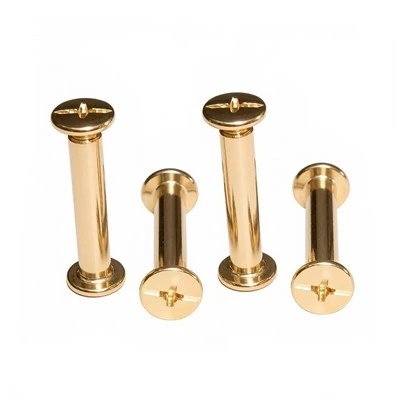

Hey there! As a supplier of Aluminum Hollow Rivets, I often get asked about the fatigue life of these little yet crucial fasteners. So, let's dive right in and have a chat about what exactly the fatigue life of aluminum hollow rivets means and what factors can affect it.
First things first, what is fatigue life? Well, it's basically the number of loading cycles that a component, in this case, an aluminum hollow rivet, can endure before it fails due to fatigue. Fatigue failure isn't like a sudden break under a single heavy load. Instead, it happens over time as the rivet is subjected to repeated stress, which causes tiny cracks to form and gradually grow until the rivet can no longer hold up.
One of the main factors that influence the fatigue life of aluminum hollow rivets is the material itself. Aluminum is known for its good strength - to - weight ratio, corrosion resistance, and relatively high ductility. These properties are great for a lot of applications, but they also play a role in fatigue. The purity and alloy composition of the aluminum can significantly impact how well the rivet withstands cyclic loading. For example, if the aluminum has impurities or is not properly heat - treated, it can have weak points where cracks are more likely to initiate.
The design of the rivet also matters big time. The shape, size, and the thickness of the walls of the hollow part of the rivet affect its fatigue behavior. A well - designed rivet will distribute the stress evenly across its structure, reducing the likelihood of stress concentration. Stress concentration is a major enemy when it comes to fatigue. If there are sharp corners or notches in the rivet design, the stress will be concentrated in those areas, making it easier for cracks to start.
Now, let's talk about the application environment. Rivets used in different settings face different challenges. For instance, if the rivets are used in a high - vibration environment, like in an aircraft engine or a heavy - duty machinery, they'll experience much more cyclic stress compared to those used in a less - stressed environment like a simple furniture assembly. The presence of corrosive elements in the environment can also eat away at the rivet, reducing its cross - sectional area and thus weakening it over time, which in turn shortens its fatigue life.


Another key factor is the installation process. If the rivets aren't installed correctly, they can start off with internal stresses that will accelerate fatigue. For example, if a rivet is over - tightened during installation, it can cause damage to the material and create areas of high stress. On the other hand, if it's not tightened enough, it may move around during use, causing additional wear and tear.
So, how can we increase the fatigue life of aluminum hollow rivets? Well, proper material selection is the starting point. We, as a reliable supplier, make sure to source high - quality aluminum materials with the right alloy composition and purity. We also take great care in the manufacturing process. Our production methods are designed to create rivets with smooth surfaces and well - rounded edges to minimize stress concentration.
When it comes to design, we constantly work on optimizing our rivet shapes to ensure the best stress distribution. And we're not just sitting on our laurels. We're always researching and developing new designs to improve performance.
For the installation, we provide clear guidelines and recommendations to our customers. We want them to know exactly how to install our rivets to get the best results. We can also offer support and training if needed.
At this point, you might be wondering what kind of applications aluminum hollow rivets are best suited for. They're widely used in aerospace, automotive, and electronics industries, just to name a few. In the aerospace industry, they're used to join lightweight components because of their low weight and good strength. In the automotive industry, they're used for everything from interior trim to engine components. And in the electronics industry, they're used for circuit board assemblies and other precision applications.
If you're in the market for rivets, we offer a wide range of products. Along with our Aluminum Hollow Rivets, we also have Stainless Iron Semi Hollow Rivet, Aluminum Semi Hollow Rivets, Stainless Steel Semi Hollow Rivets, and Copper Hollow Rivets. Each type has its own unique properties and is suitable for different applications.
If you're interested in learning more about our products, or if you have a specific project in mind and need advice on which rivets would be the best fit, don't hesitate to reach out. We're here to help you make the right choice and ensure that your project is a success. Whether you need a small quantity for a prototype or a large - scale order for mass production, we've got you covered.
In conclusion, understanding the fatigue life of aluminum hollow rivets is crucial for ensuring the reliability and longevity of your products. By considering factors like material, design, environment, and installation, you can make informed decisions about which rivets to use and how to use them effectively. And as your trusted supplier, we're committed to providing you with high - quality rivets and the support you need. So, if you're looking for top - notch rivets and great service, give us a shout and let's start a conversation about your needs.
References
- "Mechanical Behavior of Materials" by Donald R. Askeland
- "Engineering Materials and Their Applications" by William D. Callister Jr.
- Industry reports on fastener technology and applications