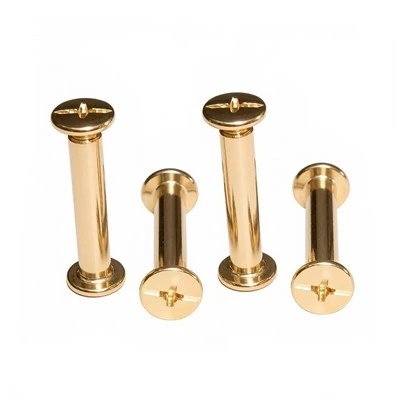

Hey there! I'm a supplier of Hollow Tubular Rivets, and today I wanna chat about a question that often comes up: Do hollow tubular rivets rust easily?
Let's start off by understanding what hollow tubular rivets are. These little guys are fasteners with a tubular shape and a hollow center. They're super handy in a bunch of industries, from manufacturing and construction to electronics and jewelry - making. They're used to join different materials together, like metals, plastics, and even leather.
Now, the big question about rust. Rust is basically the oxidation of iron or steel when it comes into contact with oxygen and water. But not all hollow tubular rivets are made of materials that can rust. It really depends on the type of metal they're made from.
Types of Hollow Tubular Rivets and Their Rust - Resistance
Steel Tubular Rivets
Steel is a common material for tubular rivets. Steel Tubular Rivets offer good strength and durability. However, steel is prone to rusting. If steel tubular rivets are exposed to moisture and oxygen over time, they'll start to form rust. The rust is actually iron oxide, and once it starts, it can spread and weaken the rivet.
But here's the thing - not all steel tubular rivets will rust at the same rate. If the steel is coated, like with zinc or chrome, it can significantly slow down the rusting process. These coatings act as a barrier between the steel and the environment, preventing oxygen and water from reaching the metal. So, if you're in an environment where rust is a concern, you might wanna go for coated steel tubular rivets.
Brass Tubular Rivets
Brass is an alloy made of copper and zinc. Brass Tubular Rivets are known for their corrosion - resistance. Unlike steel, brass doesn't rust because it doesn't contain iron. Instead, when brass is exposed to the elements, it forms a protective layer called patina. This patina actually helps to prevent further corrosion and keeps the rivet in good shape.


Brass tubular rivets are great for applications where you need a fastener that can withstand moisture and won't degrade over time. They're also popular in decorative applications because of their nice golden - like appearance.
Semi - Tubular Rivets
Semi Tubular Rivets have properties similar to tubular rivets but with a partial hole in the center. Their rust - resistance largely depends on the material they're made from, just like full - tubular rivets. For example, semi - tubular rivets made of steel will be susceptible to rust, while those made of brass will be more resistant.
A specific type of semi - tubular rivet is the Flat Head Semi Tubular Rivet. These are often used in applications where a flush surface is required. Again, the rust factor comes down to the base material.
Hollow Tubular Rivets
Hollow Tubular Rivets can be made from various materials, so their rust - susceptibility varies. If they're made of steel without proper coating, they're likely to rust. On the other hand, if they're made of brass or other non - ferrous metals, rust won't be an issue.
Factors Affecting Rusting
It's not just the material that determines whether hollow tubular rivets will rust. There are a few other factors at play too.
Environment
The environment where the rivets are used plays a huge role. If they're used in a coastal area, where the air is salty and humid, they're more likely to rust. Saltwater is extremely corrosive, and it speeds up the oxidation process. Similarly, in industrial areas where there are pollutants in the air, or in areas with high levels of humidity, rusting can occur more quickly.
On the flip side, if the rivets are used in a dry, climate - controlled environment, the chances of rusting are much lower. For example, in an indoor electronics factory where the air is dry and clean, the rivets are less likely to be affected by rust.
Surface Finish
The surface finish of the rivet can also impact its rust - resistance. A smooth, polished surface is less likely to hold moisture and dirt, which can lead to rust. On the other hand, a rough or porous surface can trap water and oxygen, making it easier for rust to form.
Contact with Other Metals
When different metals come into contact, it can create a galvanic reaction, which can accelerate rusting. For example, if a steel tubular rivet is in contact with a more noble metal like copper, it can cause the steel to corrode more quickly. So, it's important to consider the compatibility of the metals when using hollow tubular rivets in a multi - metal assembly.
How to Prevent Rust
If you're using steel hollow tubular rivets and you're worried about rust, there are a few things you can do.
Coating
As I mentioned earlier, applying a coating to the rivets can be a great way to prevent rust. Zinc plating is a popular choice because it provides a sacrificial layer that corrodes before the steel. Chrome plating also offers good protection and gives the rivets a nice, shiny appearance.
Greasing or Oiling
Applying a thin layer of grease or oil to the rivets can create a barrier against moisture and oxygen. This is a simple and cost - effective way to prevent rust, especially in short - term applications.
Storage
Proper storage is also important. Store the rivets in a dry place, away from moisture and direct contact with the ground. If possible, store them in sealed containers to prevent exposure to the elements.
Conclusion
So, do hollow tubular rivets rust easily? Well, it depends. If they're made of steel and exposed to the right (or rather, wrong) conditions, they can rust. But if they're made of brass or other non - ferrous metals, or if they're properly coated, the risk of rusting can be significantly reduced.
If you're in the market for high - quality hollow tubular rivets or need more info on rust - protection, don't hesitate to reach out. We're here to help you find the best rivets for your specific needs. Whether it's for a small DIY project or a large - scale industrial application, we've got you covered. Contact us today to start the conversation and get the right rivets for your job.
References
- "Metals and Their Corrosion" by John W. D. West
- "Fasteners Handbook" by Henry Petroski